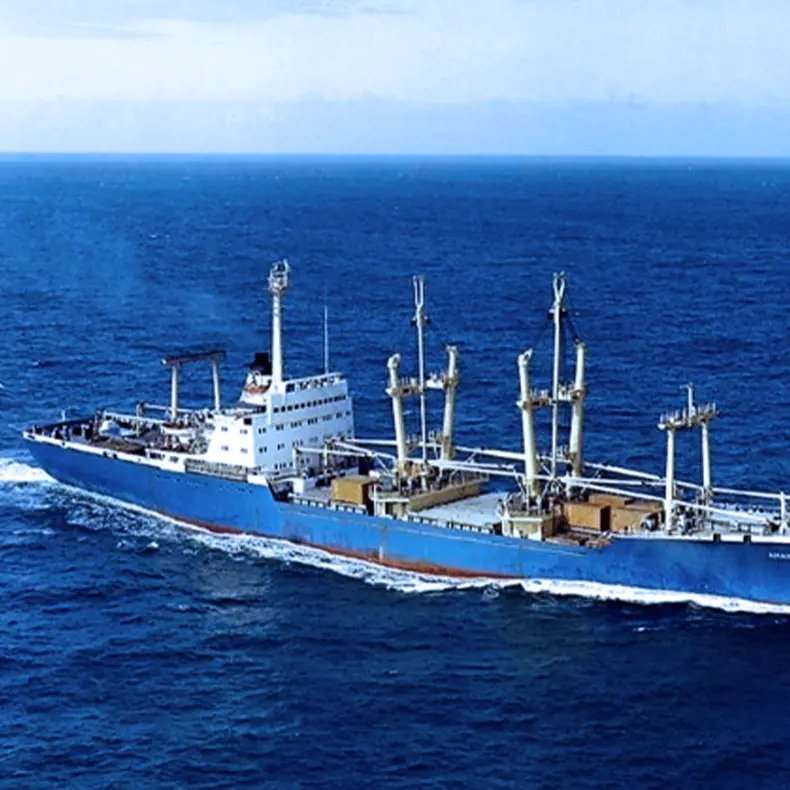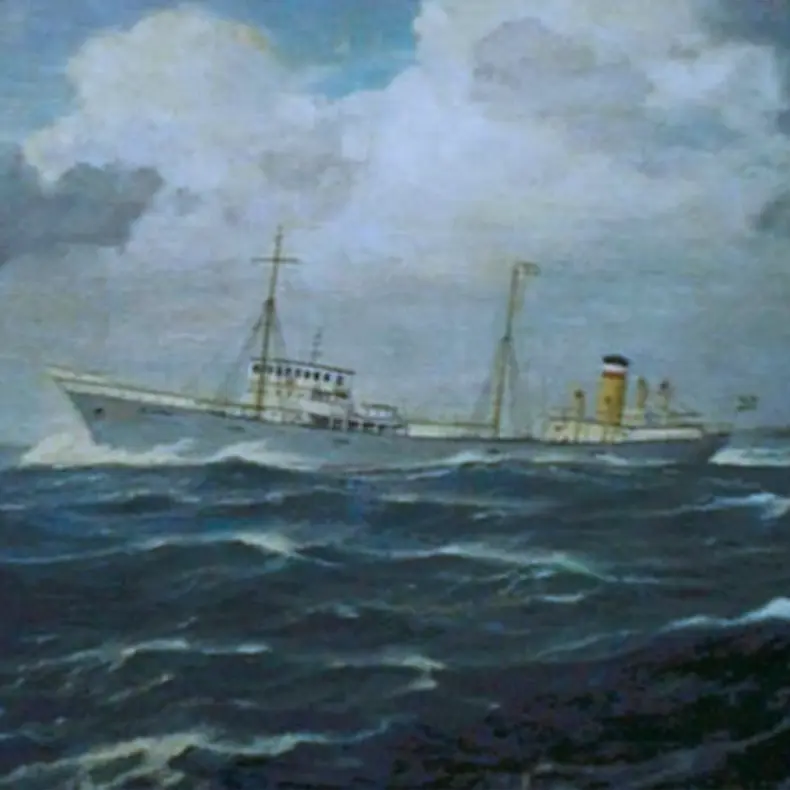
Painting of the Sirius, the first ship in Aliança’s fleet.

76 years connecting Brazil

Since 1950, when German immigrant Carl Fischer founded Empresa de Navegação Aliança, the company has been part of the history of Brazilian logistics, from cabotage between Brazilian ports to expansion into Argentina, Europe and the United States, and through the arrival of containers.

In 1999, Aliança led the revival of cabotage in Brazil, renewing its fleet with modern ships and integrating sea and road transport end to end.

Joining A.P. Moller-Maersk in 2017 broadened this calling: today Aliança combines deep knowledge of the Brazilian market with Maersk’s global logistics scale.

1950–1959

Foundation

In 1928, at the age of 19, Carl Fischer left Germany for South America. After a brief stay in Buenos Aires, he settled in Santos (SP), Brazil. Working at Banco Germânico, he had his first contact with the food trade between Brazil and Argentina and, from 1932, began working as a trader (a professional who negotiates commodities) of Brazilian fruit for export. Fischer then began chartering space on refrigerated ships and, as his business grew, he began chartering entire ships. His next step was to own ships.
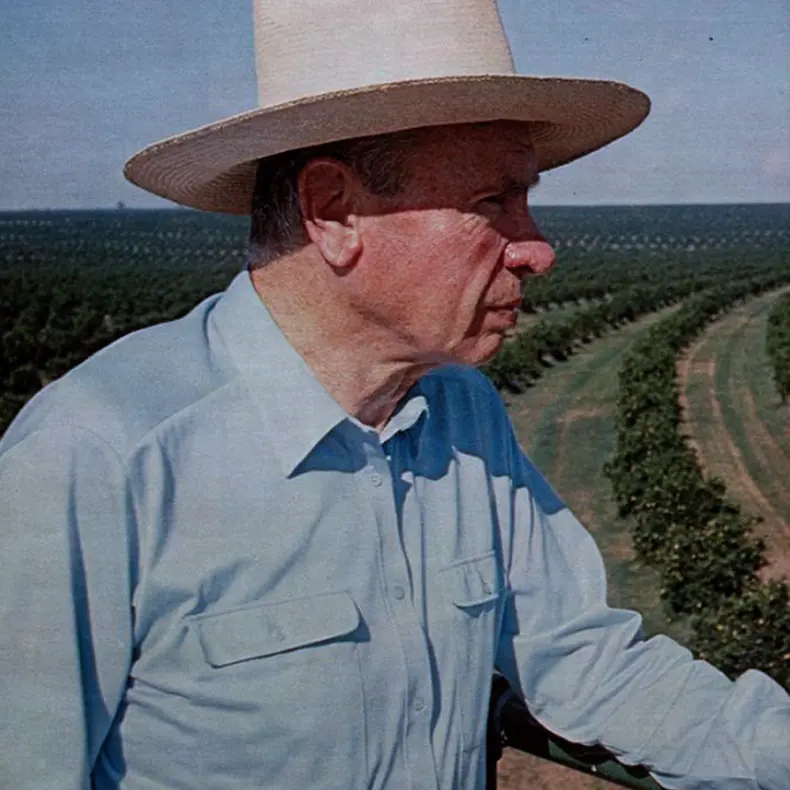
Carl Fischer on the cover of Manchete magazine: The 500 million dollar man.
“No money, but with plenty of ideas in my head as luggage”

Carl Fischer, on his arrival in Brazil.

On October 27, 1950, he founded Empresa de Navegação Aliança. In the 1950s, the company operated on two fronts: cabotage (shipping cargo between ports in the same country) at 11 Brazilian ports, from Rio Grande (RS) to Belém (PA), and refrigerated cargo transport between Brazil and Argentina, with occasional calls in Uruguay. In 1959, Aliança was appointed to carry 50% of the refrigerated cargo between Brazil and Argentina. The ships carried bananas and oranges and returned with Argentine meat and apples.

  • Did you know?

    The Sirius

    The first ship in the fleet was built in 1882 as a three-masted sailing ship, then converted to steam and later to diesel. Equipped with refrigerated holds, it sailed for Aliança for the first time in December 1951.

  • Advertisement with the Empresa de Navegação Aliança S.A. footer and a feature on Hotel Amazonas. Source: Jornal do Commercio (RJ), 1967, issue 302, p. 35 (Hemeroteca Digital Brasileira / Biblioteca Nacional). (enlarge image)

    Advertisement with the Empresa de Navegação Aliança S.A. footer and a feature on Hotel Amazonas. Source: Jornal do Commercio (RJ), 1967, issue 302, p. 35 (Hemeroteca Digital Brasileira / Biblioteca Nacional).

  • Painting of the Sirius, the first ship in Aliança’s fleet. (enlarge image)

    Painting of the Sirius, the first ship in Aliança’s fleet.

  • Newspaper advertisement for the motor ship Sirius, with cargo for Recife and Cabedelo. (enlarge image)

    Newspaper advertisement for the motor ship Sirius, with cargo for Recife and Cabedelo.

  • Newspaper advertisement for the motor ship Virginia, with cargo for Rio Grande, Pelotas and Porto Alegre. (enlarge image)

    Newspaper advertisement for the motor ship Virginia, with cargo for Rio Grande, Pelotas and Porto Alegre.

  • Carl Fischer on the cover of Manchete magazine: The 500 million dollar man. (enlarge image)

    Carl Fischer on the cover of Manchete magazine: The 500 million dollar man.

1960–1966

Adapting the Business

The opening of major highways changed cargo transport in Brazil. In 1961, the BR-116 linked Porto Alegre to São Paulo and Rio de Janeiro and, in 1963, the BR-101 reached Bahia. Trucks offered door-to-door delivery, while ports struggled with obsolete equipment and frequent strikes, with ships waiting weeks to berth. As a result, cargo began to shift heavily to road transport. Aliança responded by taking its cabotage operation to longer routes, such as Manaus. By 1962, Empresa de Navegação Aliança already accounted for 40% of refrigerated transport between Brazil and Argentina.

Refrigerated ship Frigo Ásia.
 
  • Did you know?

    Coffee for ships

    Brazil was short of foreign currency and shipyards. So Aliança renewed its fleet through a barter trade agreement with Poland, under which Brazil exchanged coffee for ships built in Polish shipyards.

  • Did you know?

    First call in Manaus

    In June 1965, the ship Lily made Aliança’s first recorded call in Manaus (AM). Decades later, the city would become one of the pillars of the company’s cabotage.

  • Refrigerated ship Frigo Ásia. (enlarge image)

    Refrigerated ship Frigo Ásia.

  • Companhia de Navegação Aliança advertisement featuring the ships Marisa and Alcyon. Source: Jornal do Commercio (RJ), June 1, 1960, issue 00206, page 15 (Acervo da Biblioteca Nacional / Hemeroteca Digital Brasileira). (enlarge image)

    Companhia de Navegação Aliança advertisement featuring the ships Marisa and Alcyon. Source: Jornal do Commercio (RJ), June 1, 1960, issue 00206, page 15 (Acervo da Biblioteca Nacional / Hemeroteca Digital Brasileira).

  • Loading notice for the ship Alcyon by Empresa de Navegação Aliança S.A. Source: Jornal do Commercio (RJ), 1963, issue 43, p. 16 (Hemeroteca Digital Brasileira / Biblioteca Nacional). (enlarge image)

    Loading notice for the ship Alcyon by Empresa de Navegação Aliança S.A. Source: Jornal do Commercio (RJ), 1963, issue 43, p. 16 (Hemeroteca Digital Brasileira / Biblioteca Nacional).

1967–1980

Expansion into Europe

In 1967, the Brazilian government reserved half of the country’s foreign maritime trade for Brazilian-flagged ships. As Lloyd Brasileiro, a major shipping company at the time, could not handle this share on its own, the largest private shipowners were invited to divide it. Aliança was given the Europe route, with 25% of the transport between Brazil and Europe. In 1969, the company became the largest private shipowner in the country.

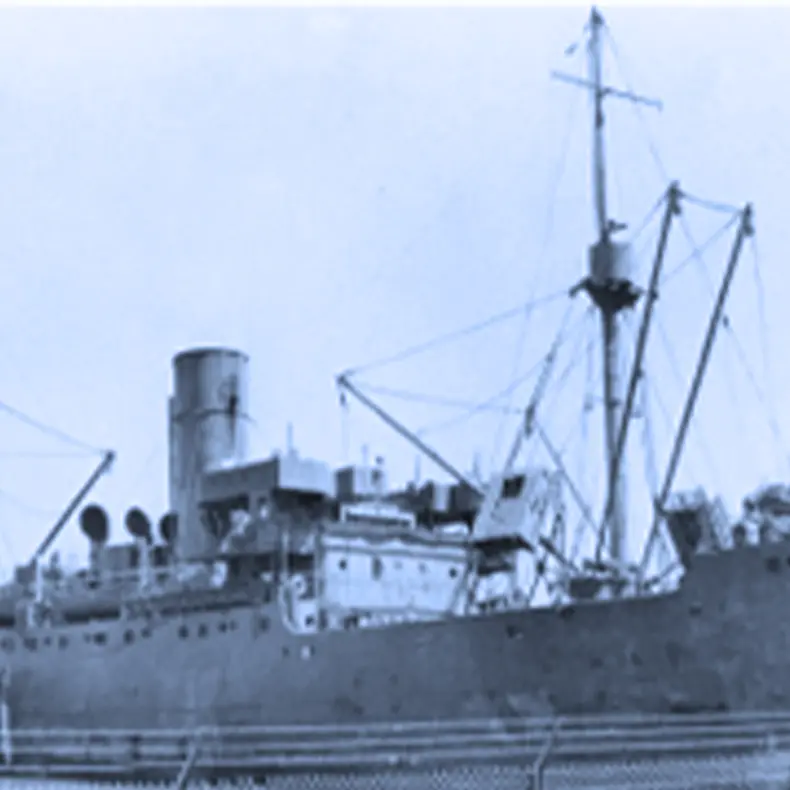
Liner ship built in Poland.

“With a regular operation of almost 30 ships, every day Aliança had one ship arriving in Brazil and another leaving for Europe! There were always five ships loading and another five unloading in Brazilian ports, and the same number in European ports”

Paulo Camelo, former director of Aliança.

With the growth of foreign trade during the economic miracle, Aliança’s ships began to be built in Brazilian shipyards, starting with the Petrópolis in 1968, followed by four refrigerated ships. Rio de Janeiro became the second largest shipbuilding hub in the world. In the 1970s, the company’s own fleet included 5 Brazilian Liners, 3 Polish Liners, 4 SD-14s and 4 refrigerated ships.

In 1977, Aliança served more than 42 ports in Europe and South America.

  • Did you know?

    One ship for every cargo

    The Liners and SD-14s were multipurpose ships, with dry holds, refrigerated holds and tanks for liquid bulk. Today there is a type of container for every need. Back then, it was the ship that adapted to all of them.

  • Did you know?

    The ships’ names

    Two of the refrigerated ships completed in 1968 honored Carl Fischer’s partners in the fruit trade: Rafael Lotito, whom Fischer called "el hermano", and Alberto Cocozza. The ships that bore their names carried, fittingly, fruit.

  • Maritime Notices section featuring the Aliança Line regular service (Emprêsa de Navegação Aliança S.A.). Source: Jornal do Commercio (RJ), October 8, 1967, p. 12 (Hemeroteca Digital Brasileira / Biblioteca Nacional). (enlarge image)

    Maritime Notices section featuring the Aliança Line regular service (Emprêsa de Navegação Aliança S.A.). Source: Jornal do Commercio (RJ), October 8, 1967, p. 12 (Hemeroteca Digital Brasileira / Biblioteca Nacional).

  • Launch of the ship Maringá in 1971, attended by the Ministers of Transport and Planning, Mr. Carlos Fischer, president of Aliança, and football star Pelé. (enlarge image)

    Launch of the ship Maringá in 1971, attended by the Ministers of Transport and Planning, Mr. Carlos Fischer, president of Aliança, and football star Pelé.

  • 1975 advertisement showing Aliança’s own fleet: Liners, refrigerated ships and SD-14s. (enlarge image)

    1975 advertisement showing Aliança’s own fleet: Liners, refrigerated ships and SD-14s.

  • Refrigerated ship Alberto Cocozza. (enlarge image)

    Refrigerated ship Alberto Cocozza.

  • Aliança advertisement: What have we done? (enlarge image)

    Aliança advertisement: What have we done?

  • Liner ship built in Poland. (enlarge image)

    Liner ship built in Poland.

  • Empresa de Navegação Aliança S.A. corporate advertisement featuring the ship Flamengo. Source: Revista Maritima Brazileira (RJ), 1972, issue 191, p. 182 (Hemeroteca Digital Brasileira / Biblioteca Nacional). (enlarge image)

    Empresa de Navegação Aliança S.A. corporate advertisement featuring the ship Flamengo. Source: Revista Maritima Brazileira (RJ), 1972, issue 191, p. 182 (Hemeroteca Digital Brasileira / Biblioteca Nacional).

  • Empresa de Navegação Aliança S.A. advertisement with the shipping schedule to European ports from Paranaguá and Santos. (enlarge image)

    Empresa de Navegação Aliança S.A. advertisement with the shipping schedule to European ports from Paranaguá and Santos.

  • Illustration of Aliança’s SD-14 ship Ana Luisa, by Carlos Cordeiro. (enlarge image)

    Illustration of Aliança’s SD-14 ship Ana Luisa, by Carlos Cordeiro.

  • (enlarge image)


1981–1995

The Beginning of Containerization

Containers had been at sea since 1956, but they only reached Brazil on a large scale in the 1980s. In 1981, Aliança’s first containers traveled on the decks of adapted SD-14 ships. In 1984 and 1985, the company’s first full-container ships arrived, the Copacabana and the Flamengo, with a capacity of 1,402 TEU each, advertised at the time as the largest sailing in South America. At the end of the 1980s, the SD-14s were converted to full-container ships and given the blue hull that would become the official color of the company’s fleet.

Aliança SD-14 ship loaded with containers.

“I don’t know who imagines an exporter would put even a single bag of coffee inside a container!”

Comment overheard in Aliança’s hallways in the early 1980s.

In 1994 and 1995, the ships Aliança Brasil and Aliança Europa arrived, with 2,303 TEU each: the last of the more than 30 ships Aliança built in Brazilian shipyards at the time.

  • Did you know?

    The fourth World Cup ships

    The Aliança Brasil was delivered on July 28, 1994, two weeks after the Brazilian national football team won its fourth World Cup. The coincidence earned the pair – Aliança Brasil and Aliança Europa – the nickname "navios do tetra" (the fourth-title ships).

  • Aliança SD-14 ship loaded with containers. (enlarge image)

    Aliança SD-14 ship loaded with containers.

  • The ship Aliança Europa. (enlarge image)

    The ship Aliança Europa.

  • The ship Aliança Brasil. (enlarge image)

    The ship Aliança Brasil.

  • Illustration of Aliança’s 20-foot, 40-foot and 20-foot insulated containers. (enlarge image)

    Illustration of Aliança’s 20-foot, 40-foot and 20-foot insulated containers.

  • The ship Aliança Brasil sailing loaded with containers. (enlarge image)

    The ship Aliança Brasil sailing loaded with containers.

  • Corporate advertisement and article about Aliança’s full-container ship Copacabana. Source: Manchete (RJ), 1984, issue 1693, p. 10 (Hemeroteca Digital Brasileira / Biblioteca Nacional). (enlarge image)

    Corporate advertisement and article about Aliança’s full-container ship Copacabana. Source: Manchete (RJ), 1984, issue 1693, p. 10 (Hemeroteca Digital Brasileira / Biblioteca Nacional).

1990–1997

The Opening of the Brazilian Economy

The turn of the decade brought record inflation and the opening of the Brazilian economy. In January 1991, Ordinance No. 7 ended the mandatory freight conferences that had governed maritime trade since 1967. Large international shipowners entered previously closed routes, freight rates fell by up to 75% on some trades, and many Brazilian shipowners went out of business.

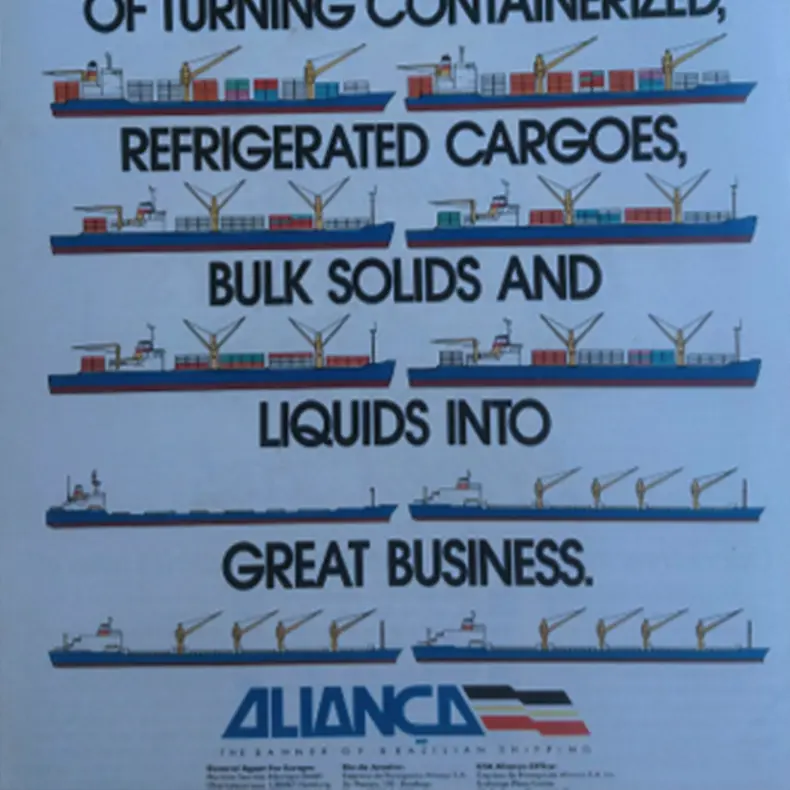
Aliança advertisement in English for the North American market, with twelve ships for containers, refrigerated cargo and dry and liquid bulk.

Well capitalized to face the opening of the market, Aliança sought new markets. In 1991, it began operating on the route to the United States.

  • Aliança advertisement in English for the North American market, with twelve ships for containers, refrigerated cargo and dry and liquid bulk. (enlarge image)

    Aliança advertisement in English for the North American market, with twelve ships for containers, refrigerated cargo and dry and liquid bulk.

1998

The Sale to Hamburg Süd

In July 1998, Hamburg Süd acquired Empresa de Navegação Aliança, ending almost five decades under the control of the Fischer family. With the acquisition, Hamburg Süd focused its own services on international routes and assigned the Brazilian domestic market and Mercosur to the newly renamed Aliança Navegação e Logística. The decision paved the way for the company’s full return to cabotage the following year.

The sale to Hamburg Süd
 
  • Did you know?

    Partners since 1967

    The relationship between the two companies began decades before the acquisition. Hamburg Süd had shared the Brazil – Europe freight conference with Aliança since the Brazilian company’s debut in deep-sea shipping in 1967. From 1991, the two began operating together on the United States trade.

1999–2012

The Revival of Cabotage in Brazil

With the stability brought by the Plano Real and the 1993 Port Modernization Law, Aliança relaunched cabotage in September 1999. This time it was a dedicated service, integrated with road transport at both ends from day one. The service started with a single 600 TEU ship between Rio Grande (RS), Santos (SP) and Manaus (AM). In just one year, volume grew from 306 TEU to more than 3,000 TEU per month.

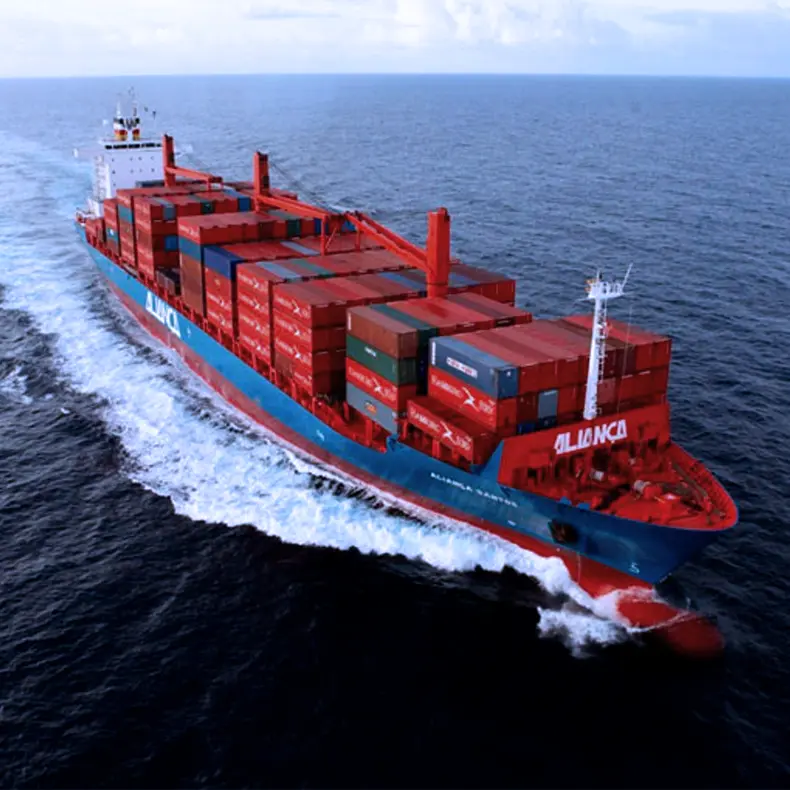
The ship Aliança Santos.

The fleet grew along with demand. Ships that had made history in deep-sea shipping – such as the Copacabana, the Flamengo, the Aliança Brasil and the Aliança Europa – began operating in cabotage and, in 2005, the new Aliança Manaus and Aliança Santos entered service.

In the 2000s, the company set up two shipping loops. The first was an express route between Santos and Manaus, with calls in the Northeast. The second linked Buenos Aires, the South and the Southeast to the northeastern ports. In 2003, Aliança created its own truck fleet in Manaus, integrating sea and road.

  • Did you know?

    Cargo at both ends

    The service took off because there was cargo in both directions: rice, paper and resin in the South, and the output of the electronics hub in Manaus. Tube televisions were the most emblematic example of this operational success via cabotage. They were so bulky that only about 30 units fit in each container.

  • Did you know?

    When in doubt, go to the supermarket

    A sales curiosity. To find new cargo, Aliança’s sales team at the time used to go to supermarket shelves and read on the packaging where each product was made. That way, they found out what came from far away and could shift to the sea.

2013–2016

A Regular Service

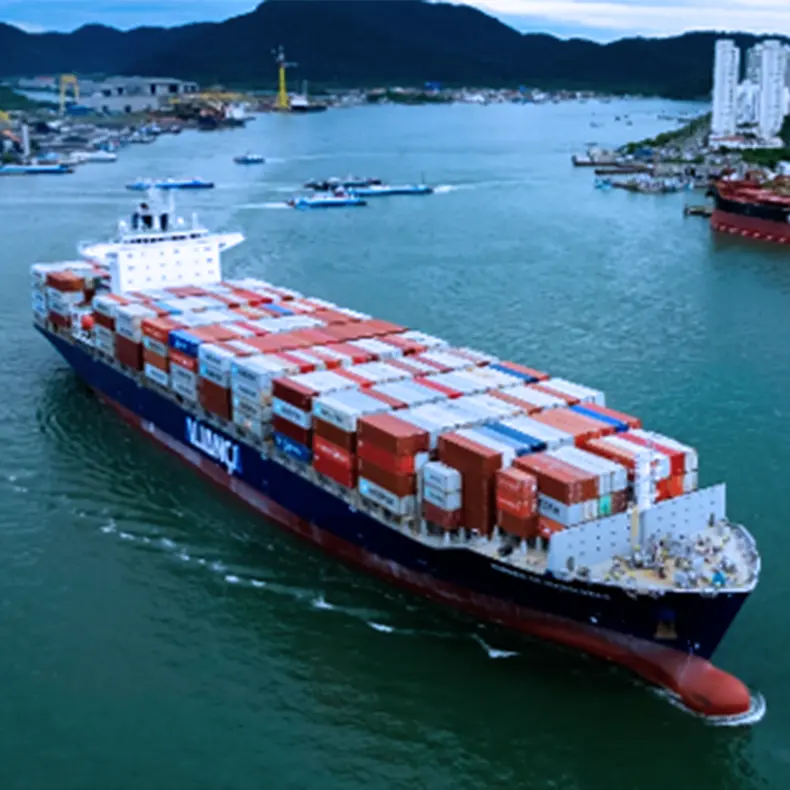
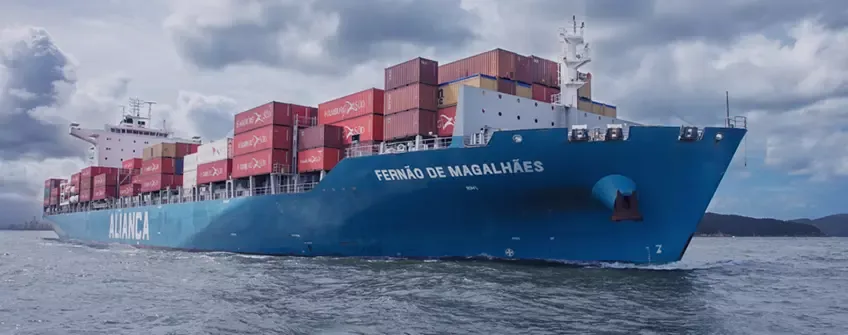
With demand growing, Aliança renewed its cabotage fleet with a new generation of ships. Between 2013 and 2014, the four Explorer I series ships arrived, with about 3,800 TEU each: Sebastião Caboto, Fernão de Magalhães, Pedro Álvares Cabral and Américo Vespúcio. In 2015, the Explorer II series brought the Bartolomeu Dias and the Vicente Pinzón, with 4,848 TEU each.

Explorer series ship entering port.

More than space, the Explorers brought consistency: for the first time, every week of the rotation had a ship of similar capacity. With more predictability and capacity, the shift of cargo from road to sea gained momentum. According to ABAC (the Brazilian Association of Cabotage Shipowners), Brazilian cabotage grew 12% in 2017, 8% in 2018 and 16% in 2019.

  • Did you know?

    The ship of the week

    Cabotage had been reborn under the Port Modernization Law, but most ports were still public, with berthing on a first-come, first-served basis. One factor changed that: the modernization and professionalization of the terminals in Fortaleza (CE), Recife (PE), Santos (SP) and Manaus (AM). With this, "one ship a week" became "one ship always on the same day of the week", with a set berthing window. Industry could then plan inventory and production around cabotage.

2017–2024

Integration into A.P. Moller – Maersk

In 2017, A.P. Moller - Maersk acquired Hamburg Süd globally and, with it, Aliança became part of one of the largest integrated logistics and shipping groups in the world, while keeping its focus on the Brazilian market.

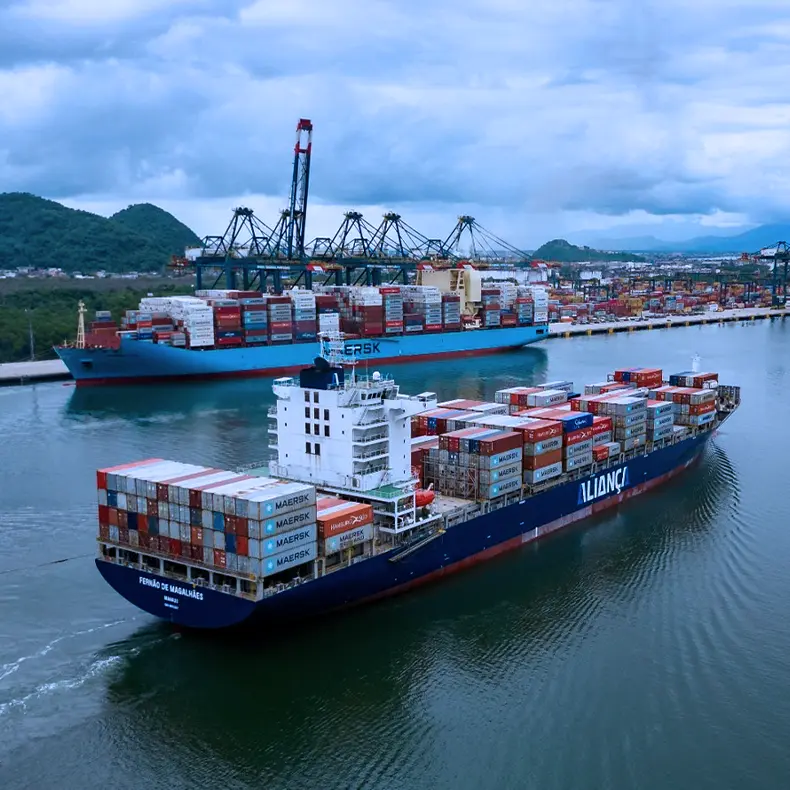
Maersk and Aliança ships in port.

The integration brought together complementary strategies. In 2016, Maersk had announced its transformation into a global logistics integrator, expanding its scope to offer end-to-end solutions to customers. For Aliança, this move reinforced a vision it had held since relaunching cabotage in 1999: sea transport creates more value when it is connected to the entire logistics chain, from the port to the customer’s door.

Following this integration, Aliança’s logistics structure gained scale. The group expanded its land fleet with 113 more truck tractors and 222 trailers, as well as its own road operations in Pernambuco, Bahia and Santa Catarina. New warehouses were added to the operation, including the Cajamar (SP) and Cabo de Santo Agostinho (PE) units, while control towers began monitoring all land movements in real time.

With the end of Brazil’s bilateral maritime agreements with Chile and Argentina in 2020 and 2021, Aliança ended its Mercosur operations and began focusing exclusively on the Brazilian market, with an emphasis on cabotage and door-to-door integrated logistics. The change ended a historic presence in Argentina that had begun in the company’s early years with refrigerated transport between the two countries.

  • Did you know?

    The country discovers cabotage

    In 2018, the national truckers’ strike brought Brazil’s roads to a standstill and put cabotage at the center of the country’s logistics discussions. Companies that had never used domestic sea transport began looking for alternatives to keep their supply chains running and found in Aliança an established regular service, able to connect different regions of Brazil with predictability and safety.

  • Did you know?

    Back to Brazilian shipyards

    For more than three decades, the fleet’s drydockings took place abroad. In 2023, Aliança once again carried out the scheduled maintenance and upgrades of its ships in Brazil, at the Estaleiro Atlântico Sul shipyard in Suape (PE), reviving a long tradition of working with the Brazilian shipbuilding industry.

Today

Connecting Brazil End to End

Since 1950, Aliança Navegação e Logística has connected Brazil through cabotage and door-to-door integrated logistics solutions. With its own fleet of 8 ships and 200 trucks, rail and river partners and more than 72,000 m² of warehouses, the company today brings together transport, warehousing and cargo management in a single point of contact.

The ship Vicente Pinzón, from Aliança’s current fleet.

With two control towers, it monitors more than a thousand land movements a day across the country, ensuring visibility, control and management. Digital tools complement this operation: the Portal da Cabotagem, the Portal Cotação and Captain Peter, a virtual assistant that tracks the temperature and humidity of refrigerated containers in real time.

Today, with more than 850 employees and 10 offices throughout Brazil, Aliança operates 3 shipping loops connecting more than 14 ports and serves around 2,000 customers in more than 660 Brazilian cities. As part of A.P. Moller-Maersk, it combines deep knowledge of the Brazilian market with the strength of a global integrated logistics powerhouse.

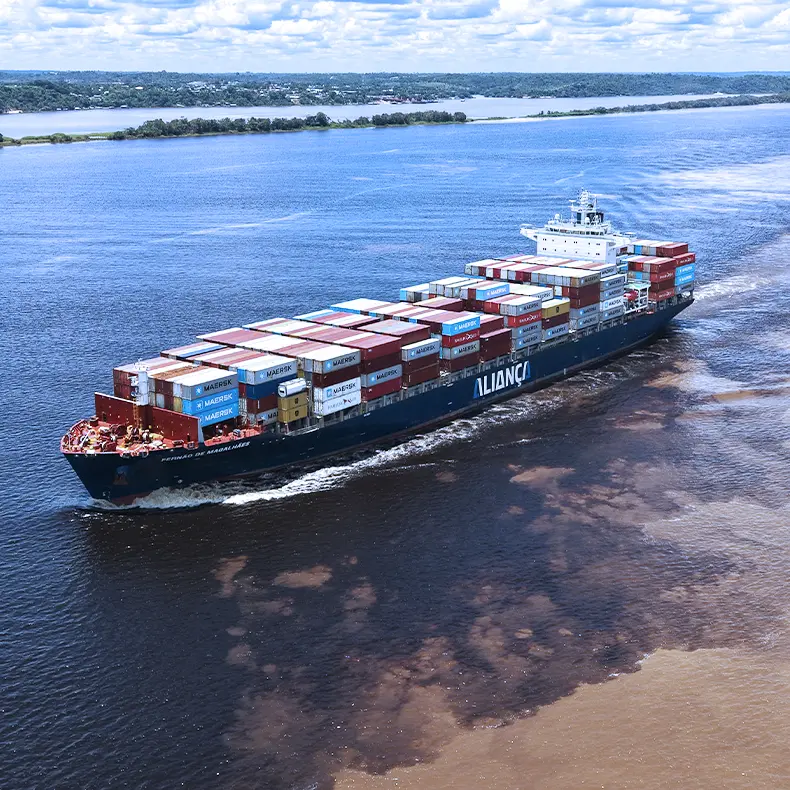
The ship Fernão de Magalhães, from Aliança’s fleet.

Meet our fleet of vessels

  • 8 vessels
  • 32,000 TEU capacity
See the fleet

Find out how Aliança can optimize your supply chain.

Aliança brings together technical knowledge, dedication and experience to help your company define the best integrated logistics solutions.

Talk to us and find out how your company can benefit from our transport solutions.

Get in touch with a specialist