


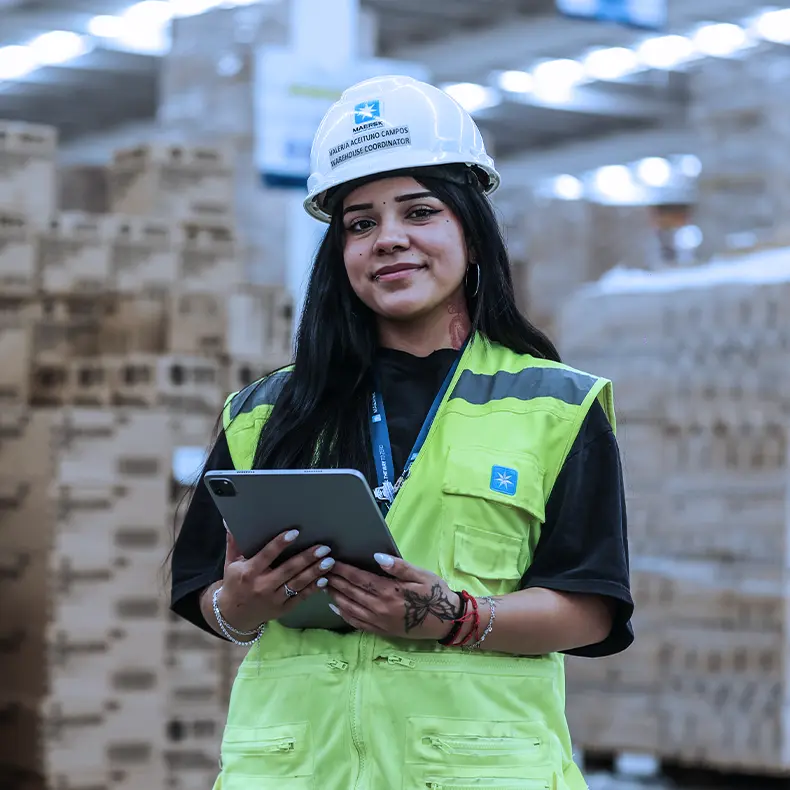
Decarbonization in Integrated Logistics
Solutions to reduce GHG emissions across your integrated logistics.
Managing every aspect of our customers’ supply chains includes considering performance in reducing greenhouse gas (GHG) emissions. We are developing an approach to integrate GHG reduction as a core component of our integrated logistics solutions. This includes improved tools and processes, engagement with customers and suppliers, and cross-industry partnerships to set standards.
Decarbonization
Reducing GHG emissions in logistics is a strategic priority. In early 2022, Maersk updated its decarbonization target to cover all direct and indirect emissions across all of the group’s services. Maersk aims to reach net zero GHG emissions by 2040, in line with the Science Based Targets initiative (SBTi) definition.
Targets

How we are advancing in emissions reduction
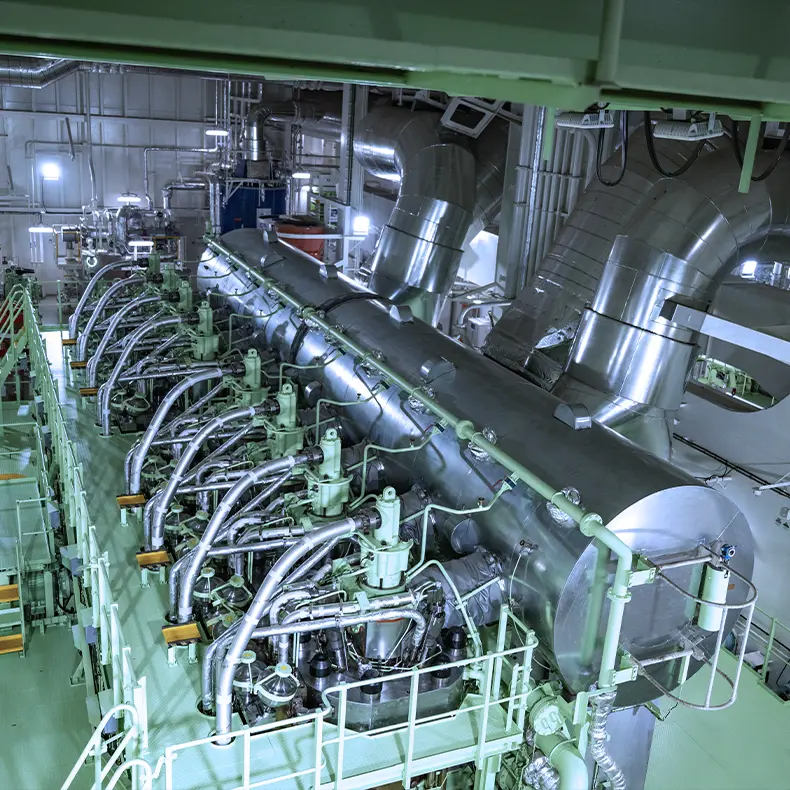
Reducing GHG emissions in logistics depends on a combination of initiatives. Our approach considers two complementary fronts: continuously improving the energy efficiency of operations and gradually expanding the use of energy sources with lower GHG emissions.
In ocean operations, these fronts include improving vessel performance, optimizing routes and speeds, renewing the fleet, adopting dual-fuel technologies and developing the supply of alternative fuels.
Energy efficiency in Aliança’s fleet
Technologies for a more efficient fleet.
-

EPL – Engine Power Limitation
On-board monitoring system that automatically records any time the engine’s maximum power limit is exceeded.
24h/day monitored
-

Variable Frequency Drives (VFDs)
A retrofit of the engine room fans that reduces fuel consumption, being rolled out progressively across the fleet.
64 t/year reduction per ship
-

ACCo + EcoTorque + EcoTuning
Three systems that together optimize combustion, smooth out speed variations and fine-tune the control software.
– 5% reduction
-

AMP — Alternative Maritime Power
Seven Aliança ships are already able to receive shore power while berthed, subject to the development of Brazilian port infrastructure.
95% reduction
Vessels, fleet renewal and fuels
Global fleet renewal
Fleet renewal is one of the fronts of Maersk’s decarbonization journey. Since 2023, new ships with dual-fuel engines have shown that container vessels can operate on methanol.
The Laura Maersk, with a capacity of 2,100 TEU, entered service in 2023. In 2024, the Ane Maersk, with a capacity of 16,592 TEU, entered service as the first large vessel in the series of ships with methanol dual-fuel technology.
The fleet strategy includes owned and chartered ships with dual-fuel engines, allowing greater flexibility as the availability and scale of lower-GHG-emission fuels evolve. In June 2026, the fleet comprised 26 owned and six chartered vessels, and the goal is to reach 45 vessels by the end of 2030.
-

Laura Maersk 2,100 TEU · 2023 Source: Maersk , article about the Laura Maersk (opens in a new tab) -

Ane Maersk 16,592 TEU · 2024 Source: Maersk , article about the Ane Maersk (opens in a new tab)
1 Maersk defines “reduced GHG emissions fuels” as fuels with at least a 65% reduction in greenhouse gas emissions compared to the fossil fuel reference of 94 g CO2e/MJ, calculated using the REDII methodology.
Ethanol: a new pathway under global evaluation
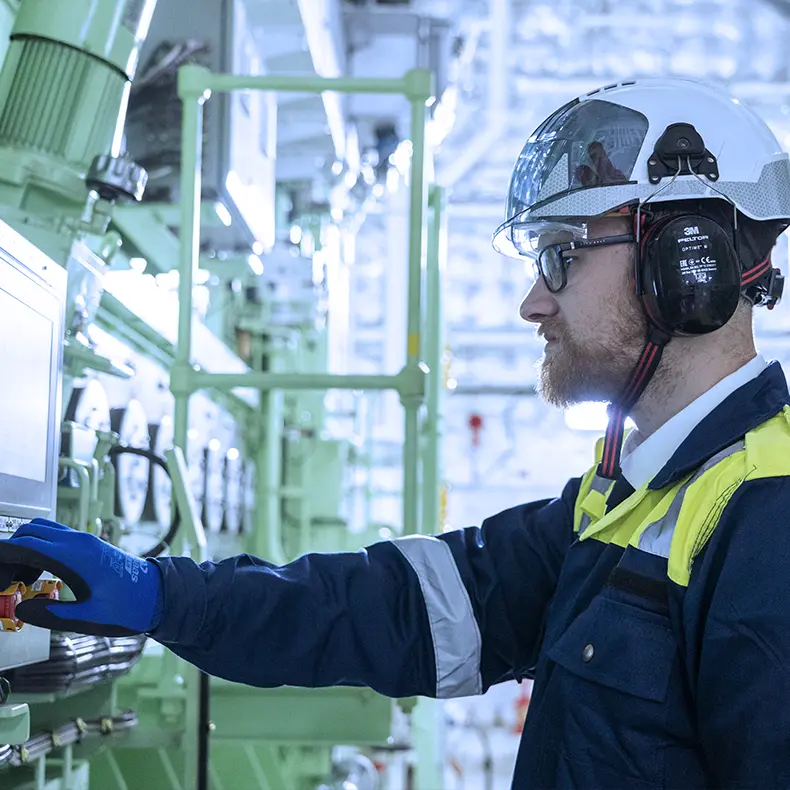
Maersk considers different fuel pathways to broaden the options available for the energy transition of shipping. As part of this global strategy, the company has been testing the use of ethanol in dual-fuel marine engines originally designed for methanol.
In October and November 2025, the Laura Mærsk carried out a test with a blend of 10% anhydrous ethanol and 90% e-methanol. The test confirmed that ethanol could be integrated into the blend without compromising engine performance.
In December 2025, a new test was carried out with a blend of 50% ethanol and 50% methanol, and in 2026 another test was carried out with 100% ethanol. The tests showed positive operational performance and provided insights to assess the use of the fuel on larger vessels.
Brazil plays an important role in these tests because of its experience in producing, handling and exporting ethanol. Expanding the use of this fuel in shipping depends on the development of bunkering infrastructure at ports.
-
October and November 2025
10%
anhydrous ethanol and 90% e-methanol
-
December 2025
50%
ethanol and 50% methanol
-
2026
100%
ethanol
Pay equity
In compliance with Brazilian Law No. 14,611 of July 4, 2023, Ministry of Labor and Employment (MTE) Ordinance No. 3,714 and Decree No. 11,795/2023, we publish the pay equity report of Aliança Navegação e Logística Ltda. for the 2nd cycle of 2026 (in Portuguese).
Sustainability Pact | MPor
This report presents the Action Plan developed under the Sustainability Pact, an initiative led by Brazil’s Ministry of Ports and Airports (MPor). The document details the environmental, social and governance (ESG) actions the company has committed to, focusing on measurable commitments and defined deadlines.
Read the Sustainability Pact Report (in Portuguese) (opens in a new tab)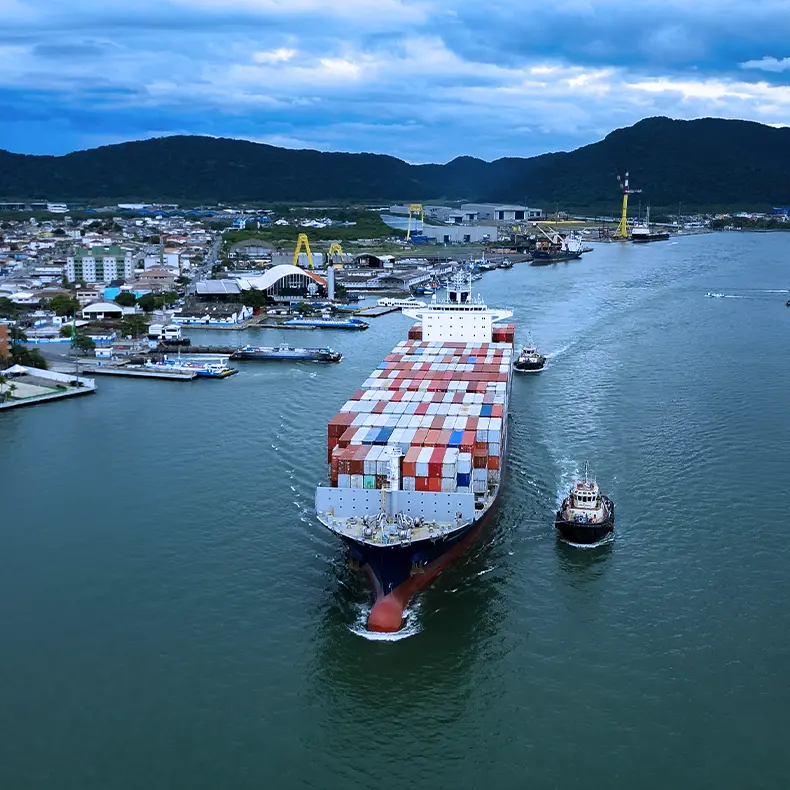
Trust and credibility
Compliance with laws and guidelines is the highest priority for Aliança Navegação e Logística as part of Maersk. Aliança Navegação e Logística underlines this with a compliance organization that is independent of operational business activities and an established compliance management system. A compliance team advises all employees worldwide on any compliance questions.
The principles of how we work together at Aliança Navegação e Logística and our expectations of external partners are set out in the following documents:
- Code of Conduct (PDF in Portuguese, opens in a new tab)
- Supplier Code of Conduct (PDF in Portuguese, opens in a new tab)
Reports of legal violations can be sent directly to the compliance organization – and, of course, also anonymously through the whistleblower system (opens in a new tab) operated by a third party. For legal reasons, please use the link or phone number specific to the country you are reporting from.